 Cucina Veloce
Arancini Siciliani – Authentic Sicilian Rice Balls
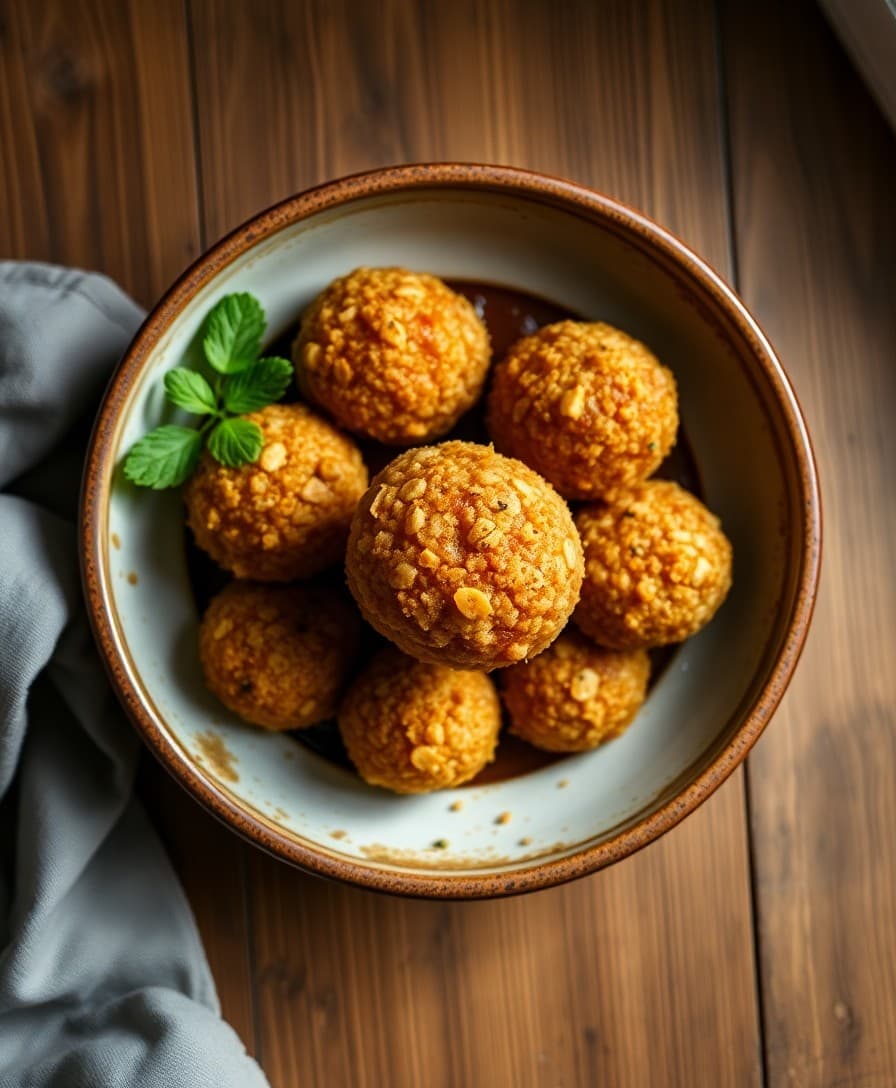
Arancini are the crown jewel of Sicilian street food, sold at every bar and friggitoria across the island from Palermo to Catania. Each golden ball hides a molten heart of slow-cooked ragù, sweet peas and stretchy mozzarella encased in saffron-tinted rice. Once you make them at home, there is no going back.
Ingredients
- 400 g (14 oz) Arborio or Carnaroli rice
- 1 sachet (0.1 g) saffron
- 50 g (1.75 oz) finely grated Parmigiano Reggiano
- 2 eggs (1 for rice mixture, 1 for coating)
- 200 g (7 oz) ground beef
- 150 g (5 oz) frozen peas
- 150 g (5 oz) low-moisture mozzarella, cut into small cubes
- 200 ml (7 fl oz) tomato passata
- 1 small white onion, finely chopped
- 150 g (5 oz) fine dried breadcrumbs
- 1 litre (34 fl oz) sunflower oil, for frying
- Salt and black pepper to taste
Method
- Cook the rice in lightly salted boiling water until just al dente, about 14 minutes. Dissolve the saffron in a tablespoon of warm water and stir it into the drained rice while still hot. Add the Parmigiano and 1 beaten egg, season with salt and pepper, mix well and spread onto a large tray to cool completely.
- Make the ragù: gently fry the chopped onion in 2 tablespoons of olive oil over medium heat until soft and translucent, about 5 minutes. Add the ground beef and brown it well, breaking up any lumps. Pour in the tomato passata, add the frozen peas, season with salt and pepper, and simmer uncovered for 15–20 minutes until the sauce is thick and dry. Let it cool completely before using.
- To shape each arancino, wet your hands lightly. Take a generous handful of cooled rice (about 80 g / 3 oz) and flatten it into a cup shape in your palm. Place a heaped teaspoon of ragù and 2–3 cubes of mozzarella in the centre.
- Close the rice firmly around the filling, pressing and compacting with both hands to form a smooth, tight oval or round ball. The shape should hold without any cracks. Repeat until all rice and filling is used.
- Set up a coating station: beat the remaining egg with a pinch of salt in a shallow bowl and spread the breadcrumbs on a plate. Dip each arancino in the beaten egg, letting the excess drip off, then roll thoroughly in breadcrumbs, pressing gently to coat evenly all over.
- Heat the sunflower oil in a deep heavy saucepan to 175–180 °C (347–356 °F). Fry the arancini in batches of 2–3, never crowding the pan, for 4–5 minutes, turning gently with a spider or slotted spoon until deep golden and uniformly crisp all over.
- Drain on a rack lined with kitchen paper and rest for 3–4 minutes before serving. This rest time is essential: it allows the mozzarella inside to become beautifully stringy and the crust to stay crisp.
Tips from the kitchen
Frequently asked questions
Can I bake arancini instead of frying them?
You can bake them at 200 °C (390 °F) fan for 20–25 minutes, brushing with a little olive oil. The result is lighter but the crust will be less crisp and deeply golden than the traditional fried version.
Can arancini be made ahead and frozen?
Yes. Shape and breadcrumb the arancini, then freeze them uncooked on a tray. Once solid, transfer to freezer bags. Fry directly from frozen at 170 °C (338 °F) for 7–8 minutes, or until golden and piping hot throughout.
Why are some arancini round and others cone-shaped?
This is a famous Sicilian rivalry: in Palermo they are traditionally round (tonde), while in Catania they are cone-shaped (a punta) to represent Mount Etna. The filling can also vary — al burro (with ham and béchamel) is another classic alongside the ragù version.