 Cucina Veloce
Paccheri al Ragù Napoletano – Authentic Recipe
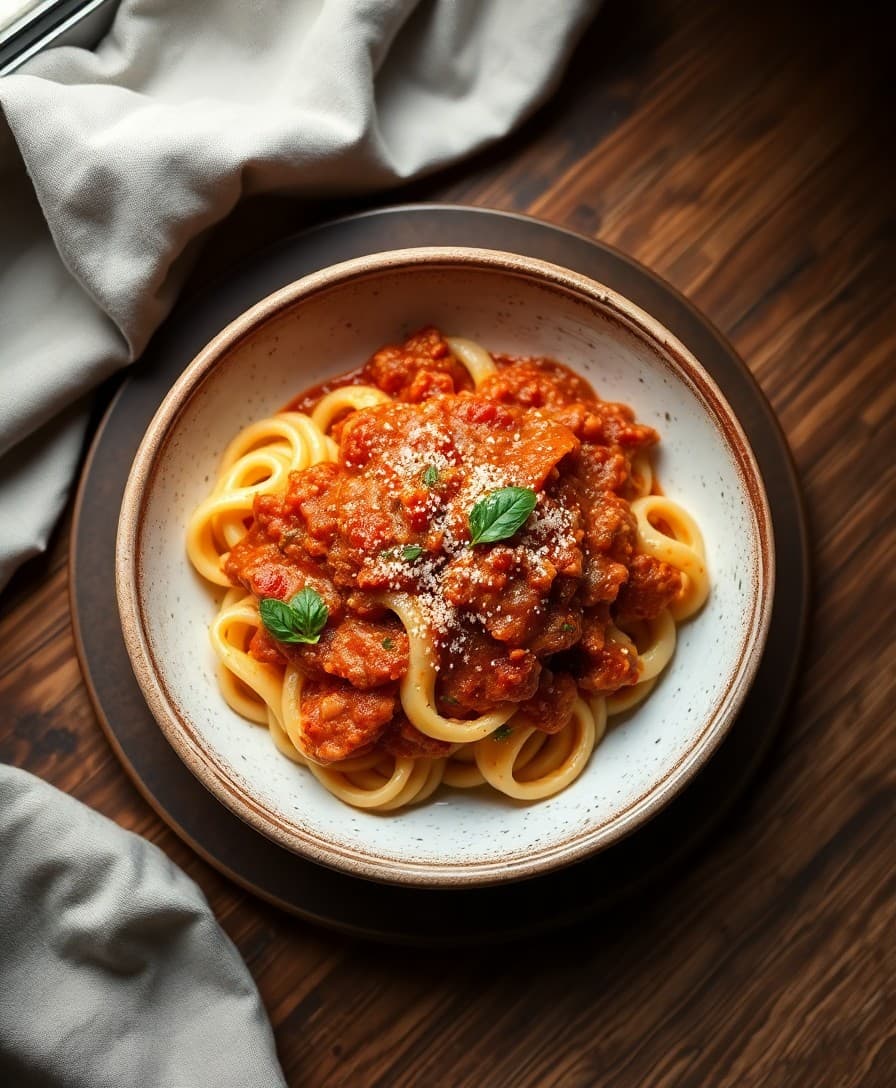
Ragù Napoletano is not a quick weeknight sauce — it is a Sunday ritual that has filled Neapolitan homes with an irresistible aroma for centuries. The secret lies in patience: whole cuts of meat braise low and slow in San Marzano tomatoes until the sauce turns a deep, glossy red. Paccheri, with their wide tubes, are the perfect vessel to catch every drop of that rich, meaty gravy.
Ingredients
- 400 g paccheri
- 400 g beef chuck or braciole (rolled beef slices)
- 300 g pork ribs or sausage
- 150 ml dry red wine (e.g. Aglianico)
- 800 g San Marzano whole peeled tomatoes (crushed by hand)
- 1 medium white onion, finely sliced
- 4 tablespoons extra-virgin olive oil
- 1 small bunch of fresh basil
- Salt to taste
- 50 g aged Pecorino Romano or Parmigiano Reggiano, grated
Method
- Heat the olive oil in a heavy-bottomed pot (preferably terracotta or enamelled cast iron) over medium heat. Add the sliced onion and cook gently for 8–10 minutes until soft and translucent — do not let it brown.
- Add the beef and pork in a single layer. Sear on all sides until deep golden-brown, about 3–4 minutes per side. This browning is essential for depth of flavour.
- Pour in the red wine and let it bubble vigorously, scraping up any browned bits from the bottom of the pot. Cook until the alcohol has completely evaporated, about 3 minutes.
- Add the hand-crushed San Marzano tomatoes. Season lightly with salt and tuck in a few basil leaves. Stir well to combine.
- Reduce the heat to the lowest possible setting. The ragù must only just tremble — never boil. Cook uncovered (or with the lid barely ajar) for at least 3 hours, stirring every 20–30 minutes to prevent sticking. The sauce is ready when it is dense, dark red, and the meat is completely tender.
- Remove the meat and set it aside to serve as a secondo (second course) or shred part of it back into the sauce.
- Bring a large pot of generously salted water to a rolling boil. Cook the paccheri for 1 minute less than the packet instructions (they should be very al dente). Reserve a ladleful of pasta water before draining.
- Add the drained paccheri directly into the ragù pot. Toss over medium heat for 1–2 minutes, adding a splash of pasta water if needed to loosen. Serve immediately with grated Pecorino and a fresh basil leaf.
Tips from the kitchen
Frequently asked questions
Can I use a different pasta shape if I can't find paccheri?
Rigatoni or ziti are the closest Neapolitan alternatives. You want a large, ridged tube that can trap the thick sauce inside. Avoid thin or delicate pasta shapes, which will not hold up to such a robust ragù.
How do I know when the ragù is truly ready?
The sauce should have reduced to a deep, dark brick-red colour and a few drops on a plate should not run — they should hold their shape. The fat will also visibly separate slightly on the surface, creating an orange-red sheen. Taste it: the sweetness of the tomato should be fully developed with no sharp acidity.
Is it authentic to add cream or butter to Ragù Napoletano?
Absolutely not. Neapolitan ragù relies entirely on the slow-rendered fat from the meat, quality tomatoes, and olive oil for its richness. Adding cream or butter would completely alter the flavour profile and is not part of the Campanian tradition.