 Cucina Veloce
Pasta al Pomodoro e Basilico – Classic Italian Recipe
Pasta al pomodoro is the beating heart of Italian home cooking — proof that a handful of quality ingredients can produce something extraordinary. Born from the sunlit kitchens of southern Italy, this dish relies entirely on sweet ripe tomatoes, fragrant basil and good extra virgin olive oil. No shortcuts, no cream, no fuss: just pure, honest flavor in every forkful.
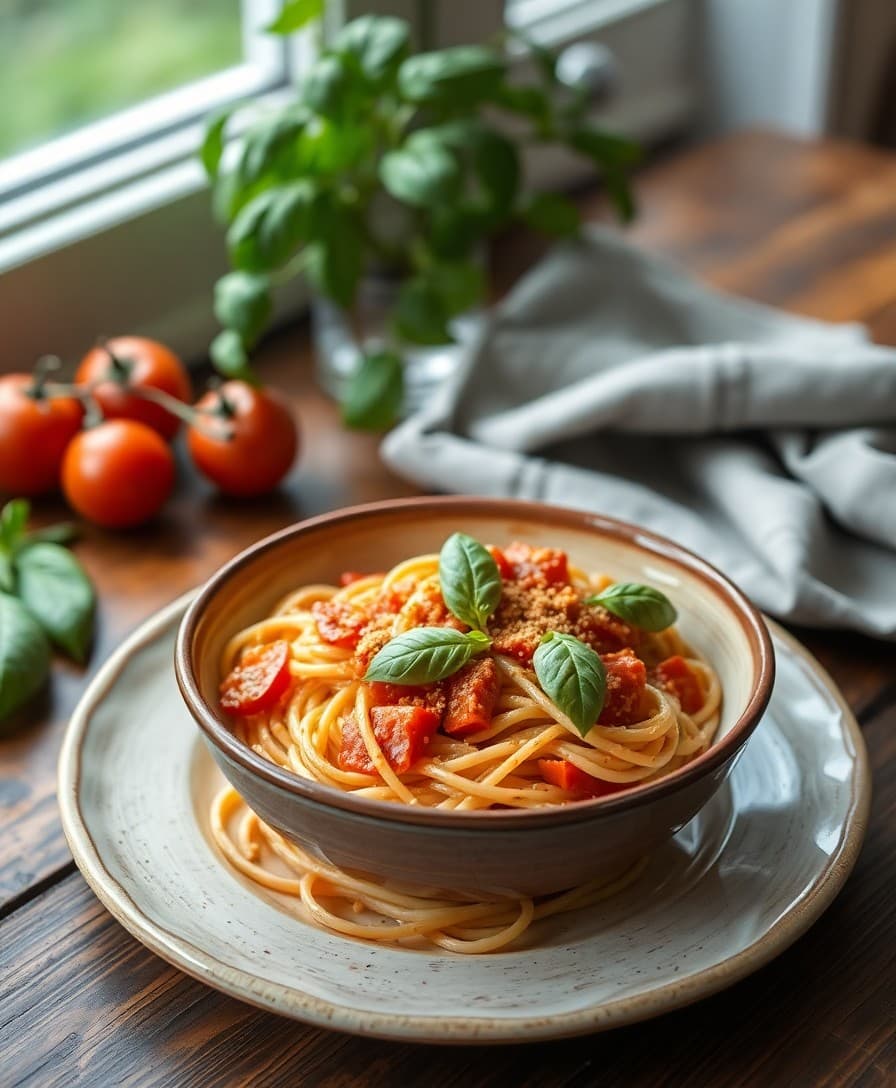
Ingredients
- 400 g spaghetti (or spaghettoni)
- 700 g ripe San Marzano or vine tomatoes (fresh) or 400 g canned whole peeled San Marzano tomatoes
- 3 cloves of garlic, lightly crushed and left whole
- 8–10 fresh basil leaves, plus more to finish
- 5 tablespoons extra virgin olive oil, plus a drizzle to finish
- 1 teaspoon fine sea salt, plus more for the pasta water
- 1 pinch of sugar (optional, only if tomatoes are acidic)
- Freshly grated Parmigiano Reggiano or Pecorino Romano, to serve (optional)
Method
- Bring a large pot of water to a rolling boil. Season generously with coarse salt — it should taste pleasantly salty, like the sea.
- If using fresh tomatoes, score a small cross on the base of each one, blanch in boiling water for 30 seconds, then transfer to iced water. Peel, deseed and roughly crush them by hand. If using canned tomatoes, crush them gently with your hands directly in the tin.
- Warm the extra virgin olive oil in a wide, heavy-bottomed pan over medium-low heat. Add the crushed garlic cloves and let them gently sizzle for 1–2 minutes until golden and fragrant — do not let them brown.
- Add the crushed tomatoes and 4–5 torn basil leaves. Season with salt and, if needed, a small pinch of sugar. Stir and let the sauce simmer uncovered over medium-low heat for 15–18 minutes, stirring occasionally, until it thickens and the oil begins to separate on the surface.
- Remove and discard the garlic cloves. Taste and adjust salt.
- Cook the spaghetti in the boiling salted water for 2 minutes less than the packet instructions (you will finish cooking it in the sauce). Reserve a generous cup of starchy pasta cooking water before draining.
- Drain the pasta and transfer it directly into the tomato sauce. Add a splash of pasta cooking water and toss vigorously over medium heat for 1–2 minutes until the sauce clings to every strand and the pasta is perfectly al dente.
- Remove from the heat, scatter over the remaining fresh basil leaves and finish with a generous drizzle of raw extra virgin olive oil. Serve immediately, with grated cheese on the side if desired.
Tips from the kitchen
Frequently asked questions
Can I use dried basil instead of fresh?
For an authentic result, always use fresh basil. Dried basil has a completely different, more medicinal flavour and cannot replicate the sweet, floral aroma of fresh leaves. Add fresh basil in two stages: a few torn leaves during cooking for depth, and more raw leaves at the very end for fragrance.
Which pasta shape works best for pasta al pomodoro?
Spaghetti or spaghettoni are the classic choices and hold the light tomato sauce beautifully. That said, other long formats like vermicelli or linguine work well. Short pasta such as rigatoni or paccheri are also delicious — the sauce collects inside the tubes. Avoid very thin pasta like angel hair, which tends to overcook and clump.
Why does my tomato sauce taste too acidic?
Acidity usually comes from underripe tomatoes or insufficient cooking time. First, make sure you simmer the sauce long enough for the natural sugars to concentrate — at least 15 minutes. A tiny pinch of sugar can help balance acidity without sweetening the sauce noticeably. Avoid adding bicarbonate of soda, which neutralises the acid but also flattens all the bright tomato flavour.