 Cucina Veloce
Pasta alla Gricia – Authentic Roman Recipe
Pasta alla Gricia is often called the grandmother of carbonara – and rightly so. Born in the Lazio hills around Grisciano, this dish predates both carbonara and amatriciana, relying on just three ingredients to deliver extraordinary depth of flavor. Master the emulsification technique and you will have one of Rome's greatest pasta dishes on your table in under 30 minutes.
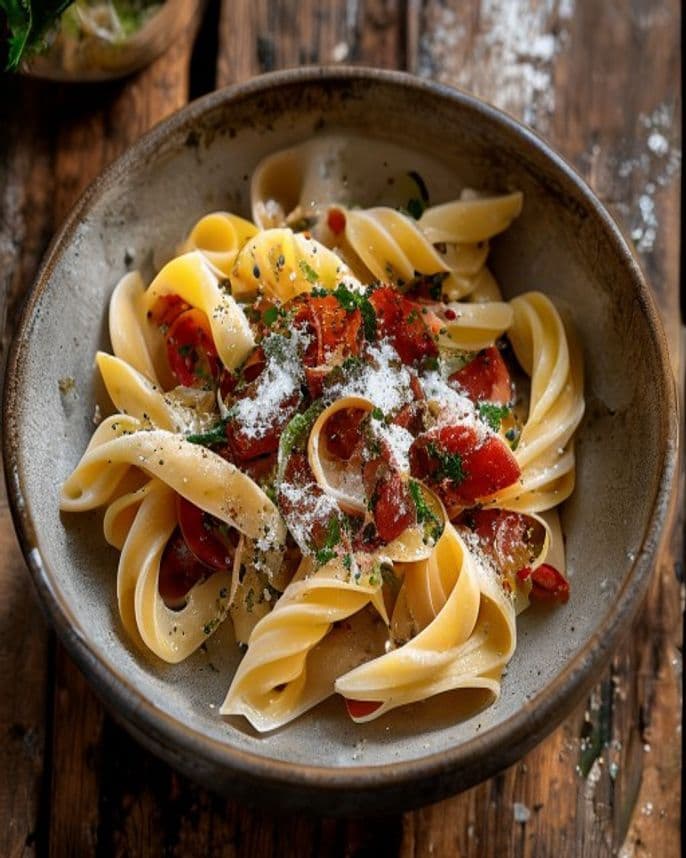
Ingredients
- 400 g rigatoni (or tonnarelli)
- 200 g guanciale (cured pork cheek), sliced into thick lardons
- 100 g Pecorino Romano DOP, finely grated, plus extra to serve
- 1 tsp coarsely ground black pepper, plus extra to taste
- 1 tbsp dry white wine (optional, for deglazing)
- Fine salt, for the pasta water
Method
- Bring a large pot of lightly salted water to a rolling boil. Pasta alla Gricia's sauce is very salty, so use less salt than usual in the water.
- Cut the guanciale into lardons roughly 1 cm thick. Place them in a cold, wide skillet and set over medium-low heat. Render slowly, turning occasionally, for 8–10 minutes until golden and crisp on the outside but still slightly soft inside. If using, deglaze with the white wine and let it evaporate completely.
- Remove the guanciale from the pan with a slotted spoon and set aside. Keep the rendered fat in the pan – this is the base of your sauce.
- Cook the rigatoni in the boiling water for 2 minutes less than the package directions. Before draining, reserve at least 2 ladlefuls (about 300 ml) of starchy pasta water.
- While the pasta finishes cooking, mix the finely grated Pecorino Romano with the black pepper in a small bowl. Add 3–4 tablespoons of hot pasta water and stir vigorously into a smooth, creamy paste.
- Drain the pasta and transfer it directly into the skillet with the guanciale fat over medium-low heat. Add a ladleful of pasta water and toss continuously for 1–2 minutes, allowing the pasta to finish cooking and absorb the fat.
- Remove the pan from the heat. Wait 30 seconds for the temperature to drop slightly, then pour in the Pecorino cream. Toss energetically, adding pasta water a little at a time, until you achieve a glossy, emulsified sauce that coats every rigatoni.
- Add the reserved crispy guanciale back to the pan, give a final toss, and serve immediately with an extra grating of Pecorino and a crack of black pepper.
Tips from the kitchen
Frequently asked questions
Can I substitute guanciale with pancetta or bacon?
For an authentic result, guanciale is essential. Its fat has a unique, delicate flavor that pancetta and especially bacon cannot replicate. Pancetta can be used in a pinch, but avoid smoked products, which will overpower the dish.
What is the best pasta shape for Gricia?
Rigatoni is the most traditional and popular choice in Rome, as its ridges and tube shape trap the creamy sauce beautifully. Tonnarelli (a thick square-cut spaghetti) is equally authentic. Avoid very thin pasta like spaghettini, which does not hold up to the bold sauce.
Why is pasta alla Gricia called the grandmother of carbonara?
Gricia is believed to date back centuries to shepherds in the Lazio village of Grisciano who made do with cured pork, aged cheese and pepper – all shelf-stable ingredients. Carbonara evolved from Gricia much later, simply with the addition of eggs, making Gricia its direct ancestor.