 Cucina Veloce
Authentic Cacio e Pepe Pasta – Classic Roman Recipe
Cacio e Pepe is one of Rome's most iconic pasta dishes — deceptively simple, yet technically precise. With only three ingredients, everything depends on technique: the right pasta water, the right temperature, and a vigorous hand. Get it right and you'll have a silky, peppery cream that clings to every strand of tonnarelli.
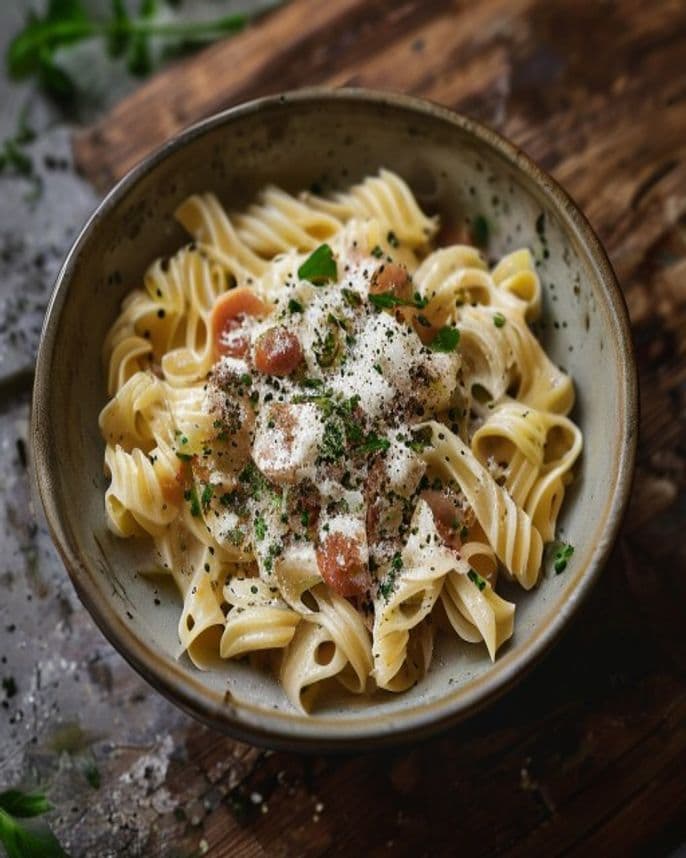
Ingredients
- 200 g tonnarelli (or spaghetti alla chitarra)
- 120 g Pecorino Romano DOP, very finely grated
- 2 teaspoons whole black peppercorns, coarsely cracked
- Coarse salt, for pasta water (use sparingly — Pecorino is very salty)
Method
- Bring a large pot of lightly salted water to a boil. Use less salt than usual — Pecorino Romano is intensely salty and will season the dish.
- Toast the coarsely cracked black pepper in a large, wide skillet over medium heat for 1–2 minutes, stirring, until fragrant. Remove from heat and set aside.
- Cook the tonnarelli in the boiling water according to package instructions, but plan to drain it 2 minutes before the stated time so it finishes cooking in the pan.
- While the pasta cooks, ladle about 2–3 tablespoons of starchy pasta water into the skillet with the toasted pepper. Return to low heat and let it barely simmer to create a pepper-infused base.
- Finely grate the Pecorino Romano into a bowl. Add 2–3 tablespoons of pasta water a little at a time, stirring vigorously with a fork until you obtain a smooth, thick, lump-free cream.
- Using tongs, transfer the al dente pasta directly into the skillet with the pepper base. Toss over low heat, adding small splashes of starchy pasta water as needed to keep the pasta moist.
- Remove the skillet from the heat completely. This step is critical — too much heat will cause the cheese to clump. Add the Pecorino cream and toss rapidly and continuously, adding tiny amounts of pasta water to achieve a glossy, fluid sauce that coats every strand.
- Plate immediately, finish with an extra crack of black pepper, and serve at once.
Tips from the kitchen
Frequently asked questions
Can I add Parmesan (Parmigiano Reggiano) to Cacio e Pepe?
Purists will say no — the authentic Roman recipe uses only Pecorino Romano. Some modern Roman trattorias use a small percentage of Parmigiano (up to 30%) to soften the sharpness, but for tradition, stick to 100% Pecorino Romano DOP.
Why does my Cacio e Pepe turn lumpy and stringy instead of creamy?
Lumping happens when the cheese hits a pan that is too hot. Always take the skillet completely off the heat before adding your Pecorino cream, toss very quickly, and keep adding small splashes of starchy pasta water. The starch in the water emulsifies the sauce and prevents clumping.
Which pasta shape is best for Cacio e Pepe?
Tonnarelli (a thick square-cut spaghetti also known as spaghetti alla chitarra) is the most traditional Roman choice — its rough surface grips the sauce beautifully. Rigatoni is also common in Rome. Avoid smooth, thin pasta like angel hair, which cannot hold the dense sauce.