 Cucina Veloce
Pici Cacio e Pepe – Authentic Tuscan Recipe
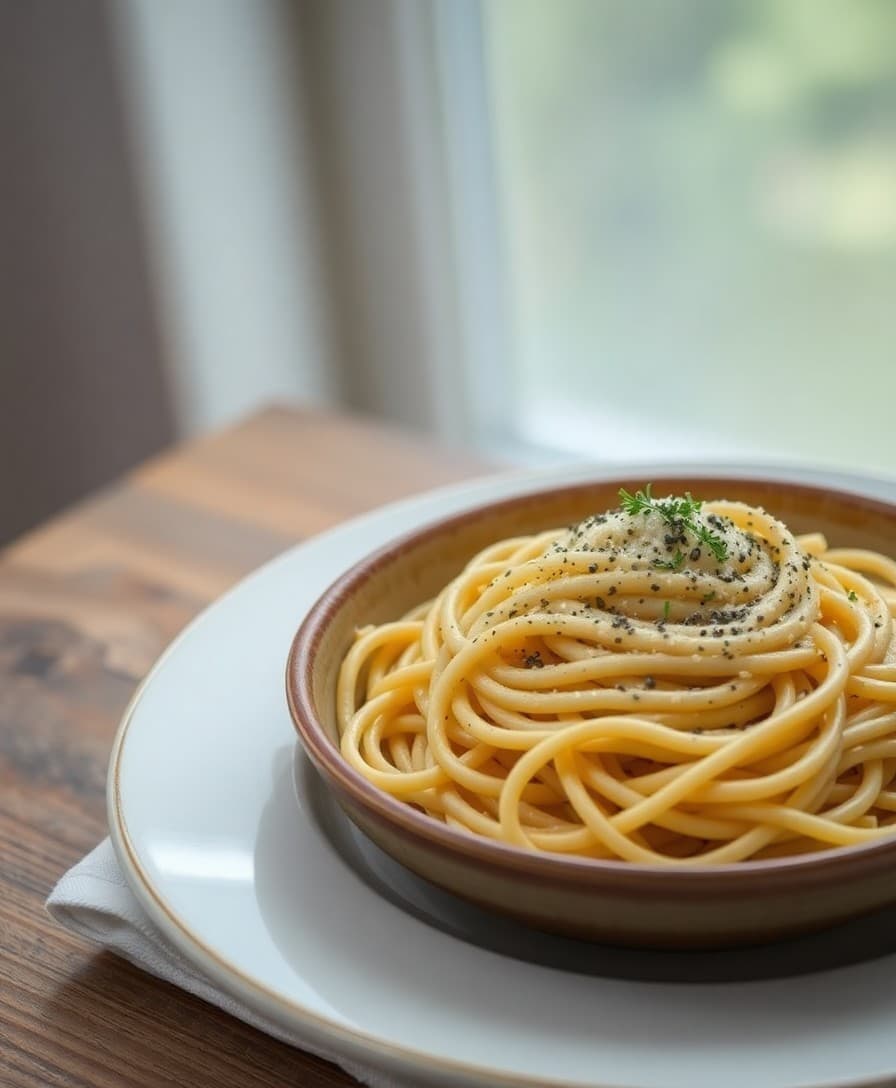
Pici cacio e pepe is one of Tuscany's most honest dishes: thick, hand-rolled pasta made with nothing but flour and water, tossed in a bold sauce of aged pecorino and cracked black pepper. Born in the hills around Siena, this recipe proves that great Italian cooking needs no shortcuts and no cream. Master the dough and the emulsion, and you have one of the most satisfying pasta dishes in the entire Italian repertoire.
Ingredients
- 400 g (14 oz) semolina flour (or 00 flour, or a 50/50 blend)
- 180–200 ml (¾ cup) warm water
- 1 tbsp extra virgin olive oil
- 1 tsp fine salt (for the dough)
- 200 g (7 oz) Pecorino Romano DOP, finely grated
- 2 tsp whole black peppercorns, coarsely cracked
- 1 tsp coarse salt (for the pasta cooking water)
Method
- Mound the flour on a wooden board, make a well in the centre, and gradually add the warm water and olive oil. Mix with a fork, then knead by hand for 8–10 minutes until you have a smooth, firm, non-sticky dough. Wrap in cling film and rest at room temperature for 30 minutes.
- Divide the dough into 4 portions. Working one at a time, roll each portion into a sheet about 1 cm (½ inch) thick, then cut into strips roughly 1 cm wide.
- Using both palms, roll each strip on the board with a back-and-forth motion, applying light, even pressure, stretching it into a long thick spaghetto about 3–4 mm in diameter. Dust lightly with semolina to prevent sticking. Repeat with all the dough.
- Toast the cracked black pepper in a dry wide skillet over medium heat for 60 seconds until fragrant. Add a ladle (80 ml) of hot water to the pan and let it infuse over low heat. Keep additional pasta cooking water nearby.
- Bring a large pot of salted water to a boil. Cook the pici for 6–8 minutes, tasting for doneness — they should be tender but with slight chew. Reserve at least 300 ml (1¼ cups) of the starchy cooking water before draining.
- Remove the skillet from the heat. Add the drained pici and a generous splash of cooking water. Toss vigorously to coat the pasta in the pepper-infused liquid.
- Gradually add the grated Pecorino Romano in two or three additions, tossing continuously and adding small splashes of cooking water between each addition. The heat from the pasta and water should melt the cheese into a smooth, glossy, cream-free sauce. Work quickly and keep tossing — never let the pan return to direct high heat or the cheese will clump.
- Plate immediately, grind a little extra black pepper over the top, and serve at once.
Tips from the kitchen
Frequently asked questions
Can I make the pici dough in advance?
Yes. You can prepare the dough up to 24 hours ahead and store it wrapped in cling film in the refrigerator. You can also shape the pici, dust them with semolina, and keep them on a floured tray (uncovered) for up to 2 hours before cooking. For longer storage, freeze them in a single layer and cook straight from frozen, adding 2–3 minutes to the cooking time.
Can I use Parmigiano Reggiano instead of Pecorino Romano?
Traditionally, no — Pecorino Romano is the correct and authentic choice for cacio e pepe. Its sharper, saltier, more pungent character is integral to the flavour of the dish. Parmigiano is milder and sweeter and gives a noticeably different result. If you must substitute, use a 70/30 blend of Pecorino and Parmigiano, but never Parmigiano alone.
Why does my cheese sauce turn lumpy or grainy?
Clumping happens when the cheese hits a surface that is too hot (above about 80 °C / 176 °F) or too dry. Always remove the pan from direct heat before adding the cheese, add it gradually, and keep adding small amounts of starchy cooking water while tossing vigorously. The starch in the water acts as an emulsifier and keeps the sauce smooth and silky.