 Cucina Veloce
Authentic Italian Porchetta – Crispy Herb-Roasted Pork
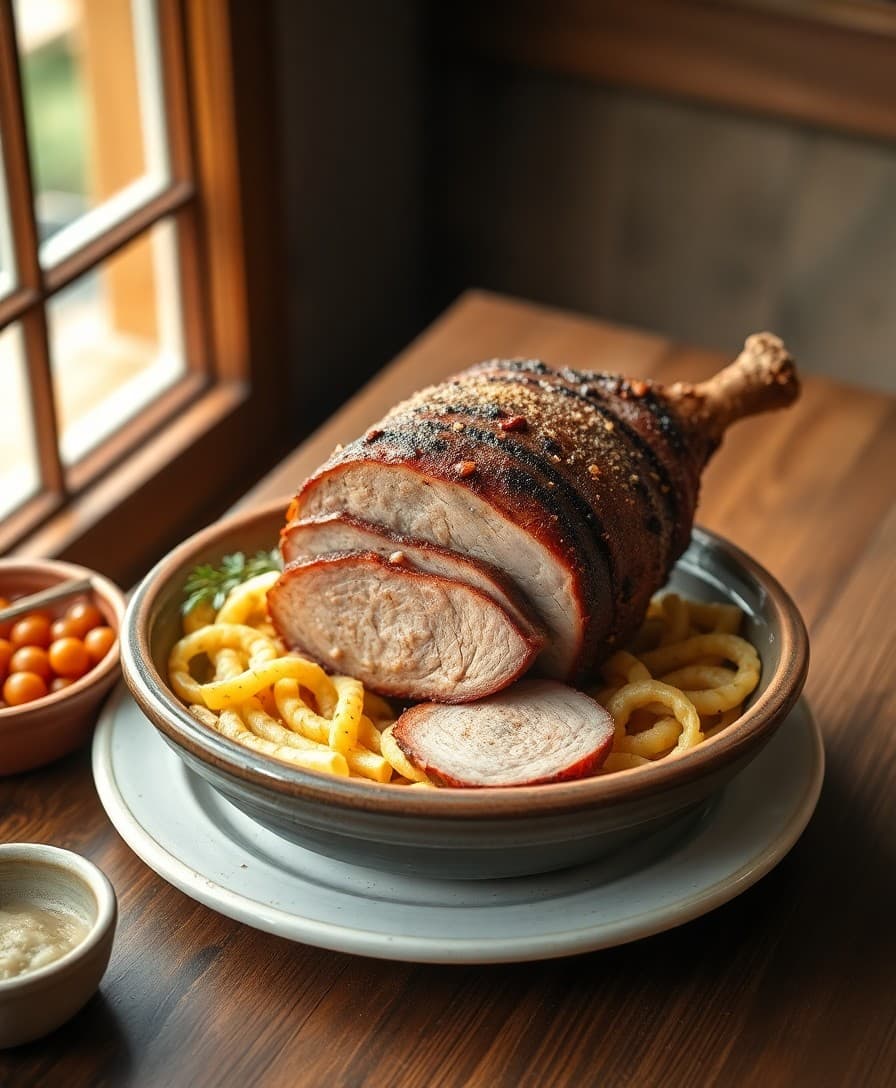
Porchetta is the undisputed king of Italian street food, born in the towns of Lazio and Umbria where whole pigs have been slow-roasted over wood fires for centuries. What makes it extraordinary is the contrast between the shatteringly crisp outer crackling and the juicy, herb-perfumed meat within. Master this recipe and you bring a piece of every Italian sagra straight to your table.
Ingredients
- 2 kg skin-on pork belly, butterflied open
- 6 cloves garlic, finely minced
- 3 tablespoons fresh rosemary leaves, finely chopped
- 2 tablespoons fennel seeds, lightly toasted and roughly crushed
- 1 tablespoon fresh thyme leaves
- 1 teaspoon chilli flakes (peperoncino)
- 3 tablespoons extra-virgin olive oil
- 2 teaspoons coarse sea salt, plus extra for the skin
- 1 teaspoon freshly ground black pepper
- Zest of 1 unwaxed lemon
Method
- Score the pork skin all over with a sharp knife, making cuts about 1 cm apart without cutting into the meat beneath. Pat the entire piece thoroughly dry with kitchen paper — a dry skin is the non-negotiable secret to crispy crackling.
- In a small bowl, combine the minced garlic, chopped rosemary, crushed fennel seeds, thyme, chilli flakes, lemon zest, olive oil, salt and black pepper to form a coarse, fragrant paste.
- Lay the pork belly skin-side down on a clean work surface. Spread the herb paste evenly and generously over the entire exposed meat surface, pressing it firmly into every corner.
- Roll the pork belly tightly from one short end to the other, keeping the skin on the outside. Tie the roll at 3–4 cm intervals with kitchen twine, pulling each knot firmly to ensure it holds its shape during cooking.
- Rub the outside of the rolled skin with a generous amount of coarse sea salt, working it into every score mark. Place the porchetta on a rack set inside a roasting tin and leave it uncovered in the refrigerator for at least 4 hours, ideally overnight, to dry out the skin further.
- Remove the porchetta from the fridge 1 hour before cooking. Preheat the oven to 220 °C (fan 200 °C). Roast at this high heat for 30 minutes until the skin begins to blister and bubble.
- Reduce the oven temperature to 160 °C (fan 140 °C) and continue roasting for a further 2 to 2.5 hours, until the internal temperature of the meat reads 70–75 °C on a meat thermometer and the skin is deeply golden and crisp all over.
- Remove from the oven and rest the porchetta uncovered on a board for at least 20 minutes before slicing. Cut into thick rounds with a sharp carving knife and serve immediately.
Tips from the kitchen
Frequently asked questions
Can I prepare porchetta in advance?
Absolutely. You can roll, tie and salt the porchetta up to 24 hours ahead and keep it uncovered in the fridge. This actually improves the crackling. Once cooked, it also reheats well at 180 °C for 20 minutes, though the crackling is always best fresh.
Which cut of pork works best for porchetta?
Skin-on pork belly is the authentic and most widely used cut, giving you the ideal fat-to-meat ratio and a generous skin for crackling. For a leaner version, a pork loin can be rolled inside the belly, but never use loin alone — it will dry out completely.
What should I serve with porchetta?
In Italy, porchetta is classically stuffed into a crusty ciabatta or rosetta roll as street food. At the table, serve it alongside roasted potatoes with rosemary, braised greens such as cicoria or broccoli di rapa, and a cold, crisp white wine from Lazio such as Frascati.