 Cucina Veloce
Spaghetti Aglio Olio e Peperoncino – Authentic Recipe
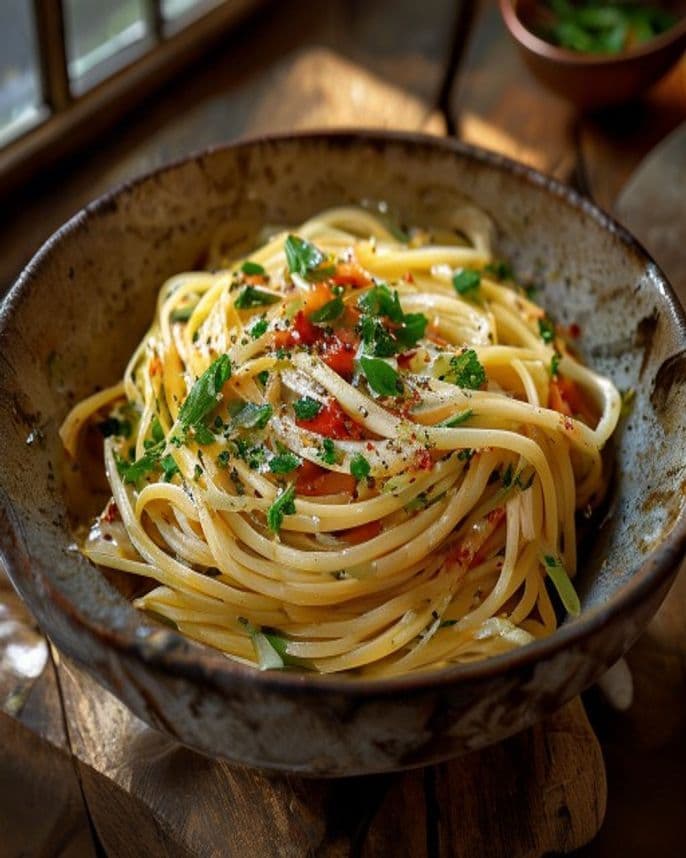
Spaghetti aglio, olio e peperoncino is the undisputed king of Neapolitan cucina povera — a dish born from an almost-empty pantry that delivers extraordinary flavour. The genius lies in the emulsion: starchy pasta water transforms humble olive oil and garlic into a glossy, silky sauce that clings to every strand. Master this recipe and you will never fear a late-night hunger again.
Ingredients
- 320 g spaghetti (high-quality, bronze-drawn)
- 4 large cloves of garlic, thinly sliced
- 80 ml extra virgin olive oil (fruity, southern Italian style)
- 1–2 dried red chillies (peperoncino), crumbled, or to taste
- 1 large handful fresh flat-leaf parsley, finely chopped
- Coarse sea salt, for the pasta water
- 60 ml starchy pasta cooking water (reserved)
Method
- Bring a large pot of water to a rolling boil. Salt it generously — it should taste like mild sea water — then add the spaghetti and cook until 2 minutes short of al dente according to the packet instructions.
- While the pasta cooks, pour the extra virgin olive oil into a large, wide skillet and place it over the lowest possible heat. Add the sliced garlic in a single layer.
- Gently toast the garlic, swirling the pan occasionally, until it turns an even pale golden colour — about 4–5 minutes. Watch it carefully: bitter brown garlic will ruin the dish. Remove the pan from the heat the moment the garlic is golden.
- Add the crumbled peperoncino to the garlic oil and let it bloom in the residual heat for 30 seconds, releasing its aroma.
- Before draining the pasta, scoop out at least 60 ml of the cloudy, starchy cooking water and set it aside.
- Drain the spaghetti and transfer it directly into the skillet with the garlic oil. Return the pan to medium heat.
- Add the reserved pasta water a splash at a time, tossing and folding the spaghetti vigorously for 1–2 minutes. The starch and oil will emulsify into a light, glossy coating — not a pool of liquid — around each strand.
- Remove from heat, toss in the chopped fresh parsley, taste for salt and chilli, and serve immediately in warm bowls.
Tips from the kitchen
Frequently asked questions
Can I use garlic powder instead of fresh garlic?
No — and this is non-negotiable in the authentic recipe. Fresh garlic slowly toasted in olive oil develops a mellow, nutty sweetness that is the backbone of the entire dish. Garlic powder or pre-minced garlic will produce a harsh, acrid result.
What is the correct pasta shape for this dish?
Spaghetti is traditional and ideal because the long, thin strands create maximum surface area for the emulsified oil to coat. Spaghettoni (thicker spaghetti) also works beautifully. Avoid short pasta shapes — they break the spirit of the dish.
Is it authentic to add breadcrumbs (pangrattato)?
Yes, absolutely. In the Neapolitan and broader southern Italian tradition, toasted breadcrumbs fried in olive oil — sometimes called 'the poor man's Parmesan' — are a completely authentic and delicious addition. Parmesan or Pecorino, however, are not used in the classic version of this dish.