 Cucina Veloce
Focaccia Barese – Authentic Apulian Recipe
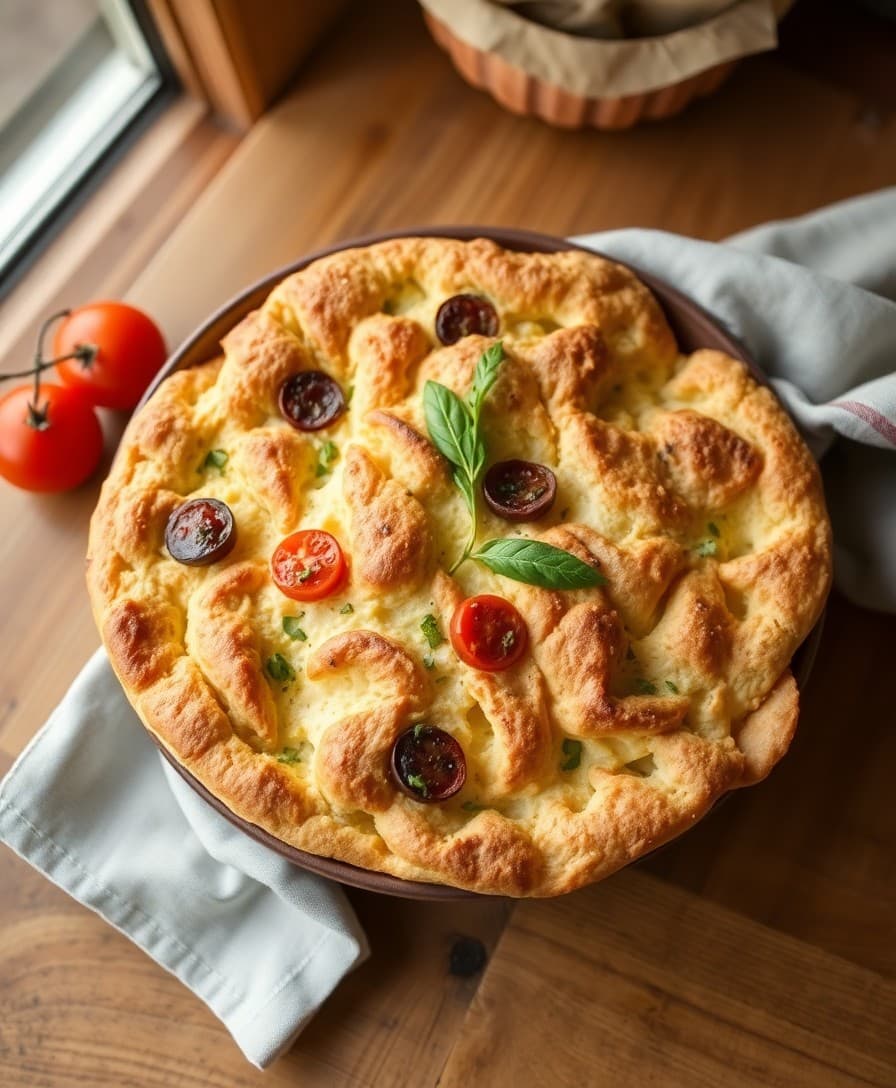
Focaccia Barese is the undisputed queen of Apulian street food, sold by the slice in bakeries across Bari since the 16th century. What sets it apart from all other focaccias is the addition of boiled potato in the dough, which gives it an incomparably soft, pillowy crumb beneath a deeply golden, olive-oil-rich crust. Topped with ripe cherry tomatoes, briny Barese olives and dried oregano, it is the taste of Puglia distilled into a single glorious slab.
Ingredients
- 500 g (3½ cups) semola rimacinata (fine re-milled durum wheat semolina)
- 150 g (5 oz) floury potato, boiled and riced while hot
- 350 ml (1½ cups) lukewarm water
- 7 g (2¼ tsp) instant dried yeast
- 10 g (2 tsp) fine sea salt
- 6 tbsp extra-virgin olive oil, divided, plus extra for the pan
- 250 g (9 oz) cherry tomatoes, halved
- 100 g (3½ oz) Barese olives in brine (or good Kalamata), pitted
- 1½ tsp dried oregano
- Coarse sea salt, to finish
Method
- Dissolve the yeast in the lukewarm water and let it sit for 5 minutes until slightly foamy. Meanwhile, rice the hot boiled potato onto your work surface or into a large bowl and let it cool to room temperature.
- Add the semolina and fine salt to the riced potato and mix to combine. Pour in the yeast water and 3 tablespoons of the olive oil. Mix until a shaggy dough forms, then knead vigorously for 8–10 minutes until the dough is smooth, supple and slightly tacky — it will be softer than a bread dough.
- Shape the dough into a ball, place it in a lightly oiled bowl, cover with cling film and leave to rise in a warm spot for 1½–2 hours, or until doubled in size.
- Generously coat a 30×40 cm (12×16 inch) dark metal baking tray with the remaining 3 tablespoons of olive oil — do not be shy, this is essential for the characteristic crisp base.
- Transfer the risen dough onto the oiled tray. Using your fingertips, gently stretch and dimple it outward to fill the tray without tearing. Cover loosely and rest for 30 minutes.
- Press the halved cherry tomatoes cut-side down firmly into the dough so they release their juice into it. Scatter over the pitted olives, pressing them in lightly. Sprinkle generously with dried oregano and coarse sea salt, then drizzle with a little extra olive oil.
- Bake in a preheated oven at 220 °C (430 °F) — or 200 °C fan — for 22–25 minutes, until the top is deeply golden and the underside is crisp and dark brown. Check the base by lifting a corner with a spatula: it should release cleanly.
- Remove from the oven and leave to rest in the tray for 5 minutes before cutting into squares. Serve warm or at room temperature.
Tips from the kitchen
Frequently asked questions
Can I use plain all-purpose flour instead of semola rimacinata?
You can, but the result will be noticeably different. Semola rimacinata (fine durum wheat semolina) gives Focaccia Barese its characteristic yellow tinge, slightly chewy crumb and robust structure. Using plain flour produces a paler, softer focaccia closer to the Ligurian style. For the most authentic result, seek out semola rimacinata di grano duro in Italian delis or online.
Why is boiled potato added to the dough?
The starch in the cooked potato absorbs water differently from flour, resulting in a dough that stays moist and produces an exceptionally soft, tender crumb even after baking in a very hot oven. This technique is the defining feature of Focaccia Barese and sets it apart from every other regional focaccia in Italy.
How do I store leftover focaccia, and can I reheat it?
Focaccia Barese is at its absolute best within a few hours of baking. Store any leftovers at room temperature wrapped in foil or in an airtight container for up to 24 hours — do not refrigerate, as this dries out the crumb rapidly. To reheat, place squares directly on the oven rack at 200 °C (390 °F) for 5–7 minutes; this revives the crisp base and warms the interior without drying it out.