 Cucina Veloce
Focaccia Genovese – Authentic Ligurian Recipe
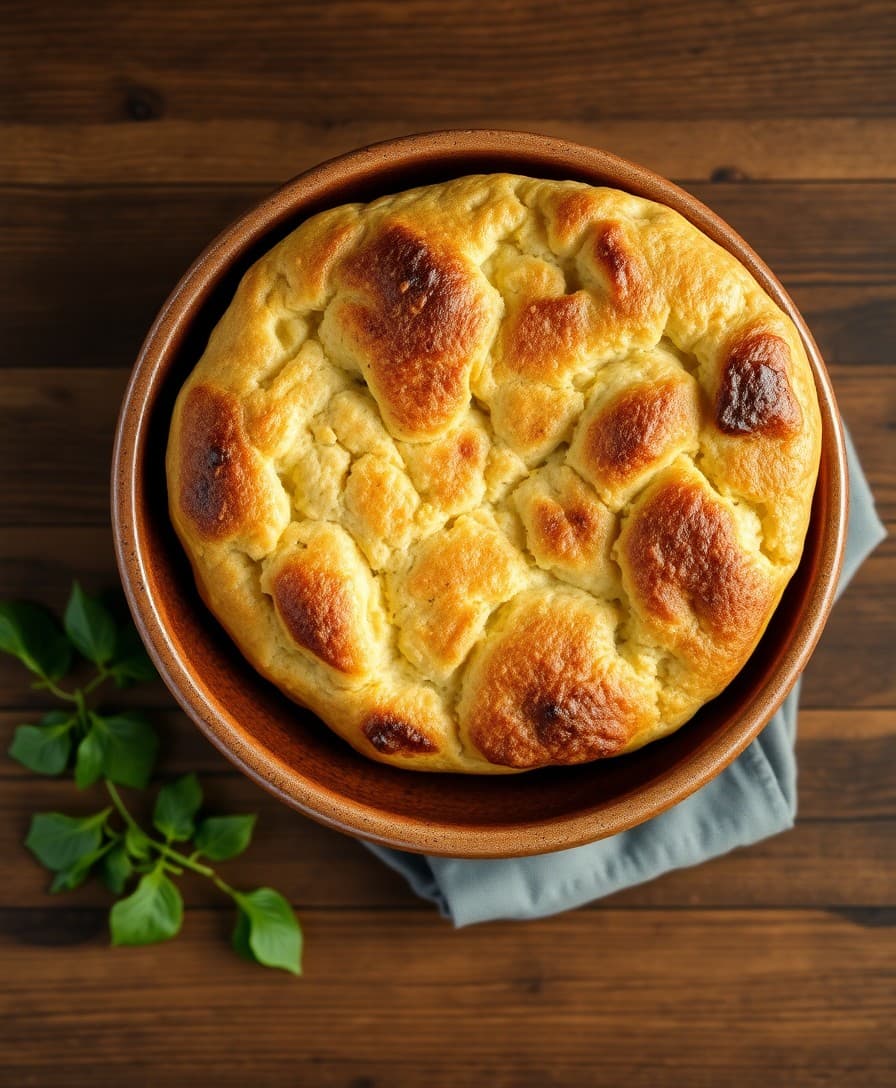
Focaccia Genovese is the pride of Ligurian baking — a flatbread so deeply rooted in Genoa's culture that locals eat it for breakfast, dipped straight into their cappuccino. What makes it unmistakable is the generous pooling of extra virgin olive oil in every dimple and the satisfying crunch that gives way to an airy, soft crumb. Master this dough once and you will make it every week.
Ingredients
- 500 g (3½ cups) strong bread flour (type 0 or Manitoba)
- 325 ml (1⅓ cups) lukewarm water
- 7 g (2¼ tsp) active dry yeast
- 10 g (2 tsp) fine sea salt
- 10 g (2 tsp) white granulated sugar
- 50 ml (3½ tbsp) extra virgin olive oil, plus extra for the pan and topping
- Coarse sea salt, generously for topping
- 50 ml (3½ tbsp) lukewarm water, for the brine topping
Method
- Dissolve the yeast and sugar in 325 ml of lukewarm water and let it sit for 5 minutes until foamy.
- In a large bowl, combine the flour and fine salt, then pour in the yeast mixture and 30 ml of the olive oil. Mix until a shaggy dough forms, then knead on a lightly floured surface for 8–10 minutes until smooth and elastic.
- Shape the dough into a ball, place it in a lightly oiled bowl, cover with cling film or a damp cloth, and let it rise at room temperature for 1 hour, or until doubled in size.
- Generously coat a 30×40 cm (12×16 inch) rimmed baking tray with 20 ml of olive oil. Transfer the dough onto the tray and gently stretch it with your hands to fill the pan — do not tear it. If it springs back, rest it for 5 minutes and try again.
- Cover loosely and let the dough proof on the tray for another 30 minutes.
- Press your fingers firmly all over the surface to create the classic deep dimples. Mix 50 ml of lukewarm water with the remaining 20 ml of olive oil and pour this brine evenly over the top so it pools in every dimple.
- Scatter coarse sea salt generously over the surface. Bake in a preheated oven at 220 °C (430 °F), fan mode, for 20–25 minutes until deep golden and crispy on top and bottom.
- Remove from the oven, let it rest in the pan for 5 minutes, then slide it onto a wire rack. Serve warm or at room temperature, cut into squares.
Tips from the kitchen
Frequently asked questions
Can I prepare the dough the night before?
Yes. After kneading, place the dough in an oiled bowl, cover tightly, and refrigerate overnight. The slow cold fermentation actually improves the flavour. Take it out 1 hour before shaping to bring it back to room temperature.
My focaccia came out dry and bread-like — what went wrong?
The most common mistake is skipping or reducing the oil-and-water brine poured over the dimpled dough. Do not be timid with the olive oil — authentic Focaccia Genovese is notoriously generous with it. Also ensure your oven is fully preheated before the tray goes in.
Can I add toppings like rosemary or olives?
Rosemary is perfectly acceptable and widely used, but purists will tell you the classic Genovese version uses only coarse salt and olive oil. Toppings like olives or onions are more typical of other Ligurian variants such as focaccia di Recco or fugassa co' çiòule.