 Cucina Veloce
Lasagne alla Bolognese – Authentic Italian Recipe
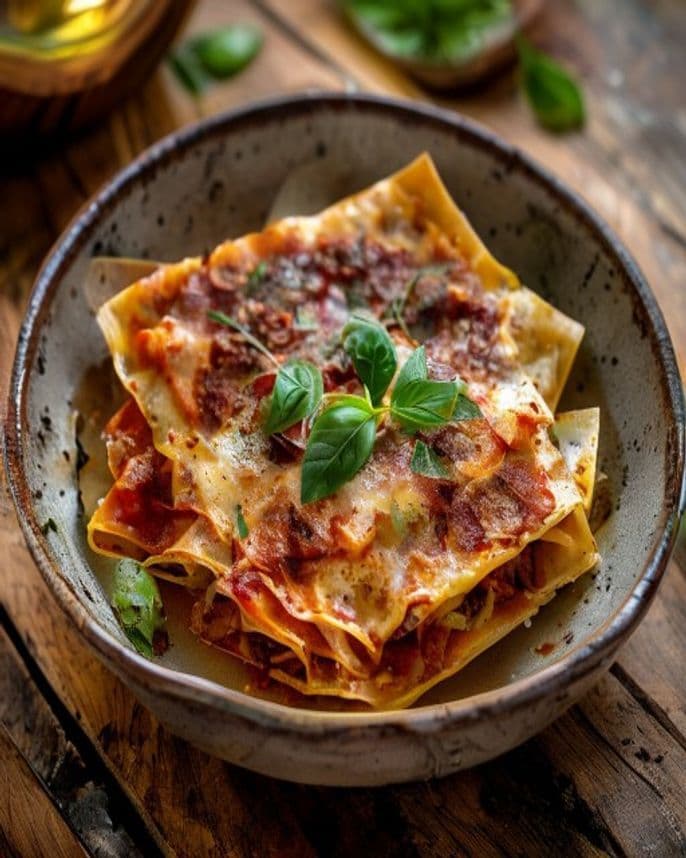
Lasagne alla Bolognese is the undisputed queen of Emilian cuisine — a dish born in Bologna that has conquered tables across the world. Layers of silky fresh pasta, a deeply flavoured slow-cooked ragù, velvety béchamel and aged Parmigiano Reggiano come together to create something far greater than the sum of their parts. This is the authentic version: no shortcuts, no substitutions, just the real thing.
Ingredients
- 400 g fresh egg lasagne sheets (green spinach pasta traditional in Bologna)
- 100 g Parmigiano Reggiano, freshly grated, plus extra for topping
- 20 g unsalted butter, for dotting the top
- For the Ragù Bolognese:
- 300 g coarse-ground beef (chuck or plate)
- 150 g coarse-ground pork (shoulder)
- 150 g pancetta, finely diced
- 1 medium white onion, finely diced
- 2 celery stalks, finely diced
- 2 medium carrots, finely diced
- 150 ml dry white wine
- 200 ml whole milk
- 400 g crushed San Marzano tomatoes (or passata)
- 2 tbsp extra-virgin olive oil
- Salt and black pepper to taste
- For the Béchamel (Besciamella):
- 1 litre whole milk, warm
- 80 g unsalted butter
- 80 g '00' flour
- Pinch of freshly grated nutmeg
- Salt to taste
Method
- Make the ragù: In a large heavy-bottomed pot, warm the olive oil over medium heat and gently fry the pancetta until the fat renders, about 3 minutes. Add the onion, carrot and celery (soffritto) and cook slowly for 8–10 minutes until soft and golden, not browned.
- Increase the heat to medium-high, add the ground beef and pork and cook, stirring frequently, until all the meat has lost its pink colour. Season lightly with salt and pepper.
- Pour in the white wine and stir until it has fully evaporated. Add the crushed tomatoes, stir to combine, then reduce the heat to the lowest setting. Cover partially and simmer for at least 2 hours, stirring occasionally. Halfway through, stir in the milk — this is the authentic Bolognese technique that tenderises the meat and rounds the flavour. The finished ragù should be dense, not soupy.
- Make the béchamel: In a saucepan, melt the butter over medium heat. Add the flour all at once and stir briskly with a wooden spoon for 1–2 minutes to form a roux (it should smell lightly nutty, not raw). Remove from heat momentarily, pour in roughly one-third of the warm milk and whisk vigorously until smooth, then return to medium heat and gradually add the remaining milk, whisking constantly. Cook for 6–8 minutes until the sauce is thick enough to coat the back of a spoon. Season with salt and a generous pinch of nutmeg.
- Blanch the fresh pasta sheets in well-salted boiling water for 30 seconds each, then lift out with a slotted spoon and lay flat on a clean damp tea towel to prevent sticking. (Skip this step if using dried lasagne sheets — follow the packet instructions.)
- Assemble the lasagne: Preheat the oven to 180 °C fan (200 °C conventional). Spread a thin layer of béchamel across the bottom of a deep baking dish (approximately 30 × 22 cm). Lay the first layer of pasta sheets, then spread a generous layer of ragù, followed by béchamel, then a scattering of Parmigiano Reggiano. Repeat these layers — pasta, ragù, béchamel, Parmigiano — building 5 to 6 layers in total.
- Finish the top layer with béchamel and a very generous coating of Parmigiano Reggiano. Dot with small knobs of butter. Cover loosely with foil and bake for 25 minutes, then remove the foil and bake for a further 15–20 minutes until the top is deeply golden and bubbling at the edges.
- Remove from the oven and allow to rest for at least 10–15 minutes before cutting and serving. This resting time is essential — it allows the layers to settle and makes for clean, beautiful portions.
Tips from the kitchen
Frequently asked questions
Can I use dried lasagne sheets instead of fresh?
Yes, though fresh egg pasta is traditional and gives the best result. If using dried sheets, choose a good-quality brand and do not pre-cook them — the moisture from the ragù and béchamel will hydrate them during baking. You may need to add a splash of hot water to the ragù to ensure there is enough liquid.
Can I prepare lasagne alla Bolognese in advance?
Absolutely — this is one of the best dishes to make ahead. You can assemble the lasagne fully (unbaked), cover tightly with cling film and refrigerate for up to 24 hours. When ready to bake, remove from the fridge 30 minutes before cooking and add 10 minutes to the covered baking time to account for the cold start.
Why does the authentic recipe use milk in the ragù?
Adding milk partway through cooking is a key step in the authentic Bolognese ragù, documented in the original 1982 recipe registered with the Bologna Chamber of Commerce. The milk proteins help tenderise the meat fibres, mellow any acidity from the tomato, and add a gentle sweetness and creaminess that makes the ragù taste rounded and complex rather than sharp.