 Cucina Veloce
Authentic Pasta all'Amatriciana Recipe
Born in the mountain town of Amatrice in the Lazio Apennines, this is one of Italy's most iconic pasta sauces — and one of its most misunderstood. The authentic recipe calls for guanciale (cured pork cheek), never pancetta or bacon, and Pecorino Romano, never Parmesan. Get these three things right and you have an untouchable classic on the table in under 40 minutes.
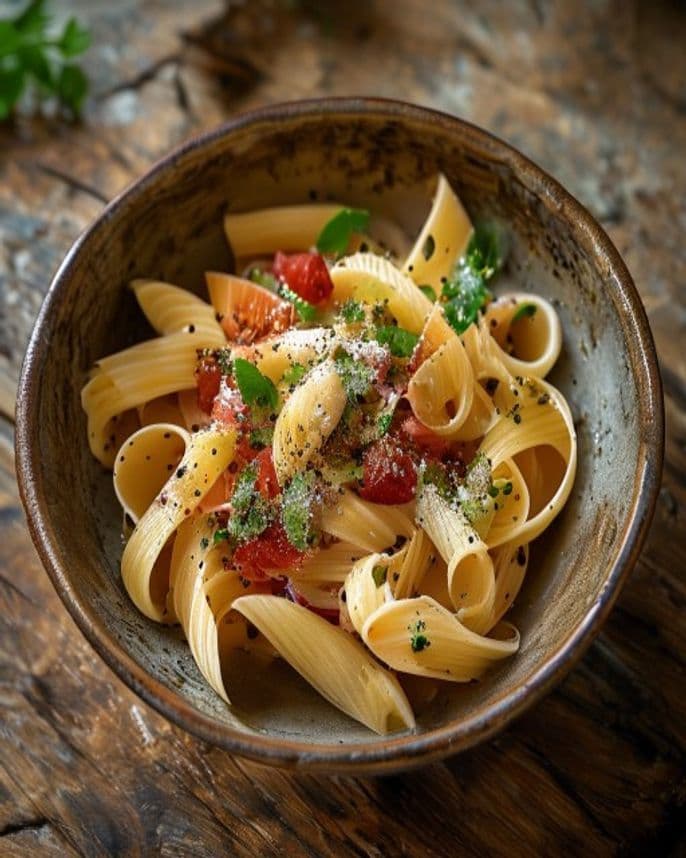
Ingredients
- 400 g bucatini
- 200 g guanciale, cut into 1 cm strips
- 400 g San Marzano whole peeled tomatoes (hand-crushed)
- 80 g Pecorino Romano DOP, finely grated, plus extra to serve
- 60 ml dry white wine
- 1 small dried chili (peperoncino), whole or crumbled to taste
- 1 tbsp extra-virgin olive oil
- Fine sea salt, for the pasta water
Method
- Place the guanciale strips in a cold, wide skillet with 1 tbsp of olive oil. Set over medium heat and cook, stirring occasionally, for 6–8 minutes until the fat has rendered and the edges are golden and just crispy. Do not rush this step.
- Add the whole dried chili to the pan and let it toast in the rendered fat for 30 seconds to bloom its heat.
- Pour in the white wine and deglaze, scraping up any caramelised bits from the base of the pan. Let the alcohol evaporate completely, about 1–2 minutes.
- Add the hand-crushed San Marzano tomatoes. Season very lightly with salt (guanciale and pecorino are both salty), stir to combine, and simmer uncovered over medium-low heat for 15 minutes until the sauce thickens and the fat floats to the surface in orange droplets.
- Meanwhile, bring a large pot of well-salted water to a rolling boil. Cook the bucatini for 1–2 minutes less than the packet instructions (it will finish cooking in the sauce).
- Reserve a ladleful (about 120 ml) of starchy pasta water before draining. Remove the chili from the sauce if you prefer a milder result.
- Transfer the drained bucatini directly into the skillet with the sauce. Toss vigorously over medium heat for 1–2 minutes, adding splashes of pasta water as needed to loosen and emulsify the sauce around every strand.
- Remove from the heat, wait 20 seconds, then add the grated Pecorino Romano in two additions, tossing constantly so it melts into a creamy coating rather than clumping. Serve immediately with extra Pecorino at the table.
Tips from the kitchen
Frequently asked questions
Can I use pancetta instead of guanciale?
Technically you can, but purists — and the town of Amatrice — would disagree. Guanciale has a higher fat content and a sweeter, more delicate flavour from the cheek. Pancetta is leaner, smokier, and changes the character of the sauce noticeably. For an authentic result, source guanciale.
Is there onion in authentic Amatriciana?
No. The traditional recipe from Amatrice contains no onion, no garlic, and no olive oil beyond a small amount to start the guanciale. These are Rome-style additions that crept in over time. The flavour base comes entirely from the rendered guanciale fat.
Can I make Amatriciana ahead of time?
The tomato sauce (without the pasta) can be made up to 2 days ahead and refrigerated, or frozen for up to 1 month. Cook the pasta fresh, finish it in the reheated sauce, and add the Pecorino only at the very last moment before serving.