 Cucina Veloce
Authentic Piadina Romagnola – Classic Italian Flatbread
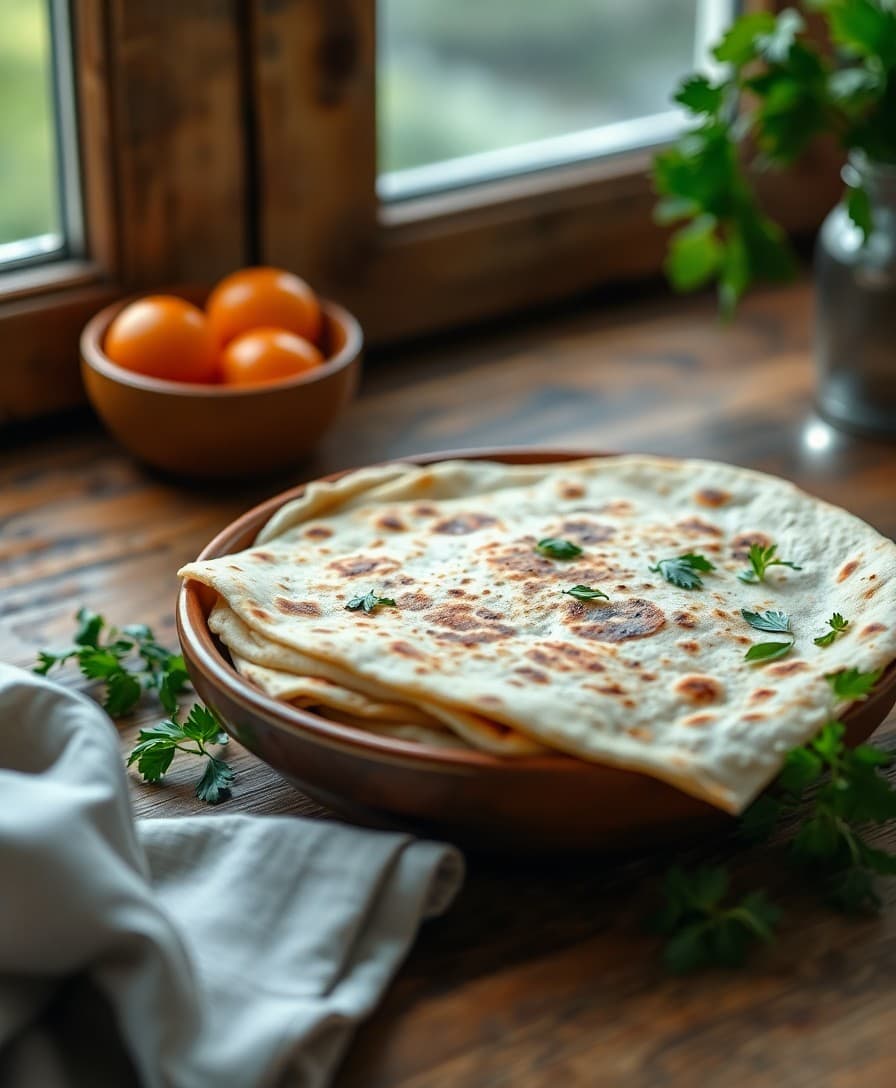
Piadina Romagnola is Romagna's most iconic street food – a thin, unleavened flatbread cooked on a hot griddle until blistered and fragrant. Born as humble peasant fare, it has conquered all of Italy with its irresistible simplicity. Filled with creamy squacquerone, cured prosciutto and peppery arugula, it is pure Romagna on a plate.
Ingredients
- 500 g (3½ cups) 00 flour, plus extra for dusting
- 100 g (3.5 oz) lard (strutto), at room temperature
- 200 ml (¾ cup + 1 tbsp) warm water
- 1 tsp fine salt
- 1 tsp baking soda (bicarbonate of soda)
- 200 g (7 oz) squacquerone cheese
- 120 g (4 oz) thinly sliced prosciutto crudo
- 60 g (2 oz) fresh arugula (rocket)
Method
- Combine the flour, baking soda and salt in a large bowl and mix well. Add the lard and rub it into the flour with your fingertips until the mixture resembles coarse crumbs.
- Gradually pour in the warm water and mix until a rough dough forms. Turn out onto a lightly floured surface and knead for 8–10 minutes until smooth, supple and no longer sticky.
- Divide the dough into 4 equal balls, cover with a clean kitchen towel and let rest at room temperature for 15 minutes. Do not skip this step – resting relaxes the gluten and makes rolling much easier.
- On a lightly floured surface, roll each ball out into a thin disc approximately 25–28 cm (10–11 inches) in diameter and 2–3 mm thick. Piadina should be thin – resist the urge to leave it thick.
- Heat a cast-iron griddle (testo) or heavy flat skillet over medium-high heat until very hot. Cook each piadina for 2–3 minutes per side, pressing gently with a folded cloth, until golden blisters form and the surface is dry and slightly charred in spots.
- Remove from the griddle and immediately spread one half of each piadina generously with squacquerone cheese while still hot. Lay slices of prosciutto crudo over the cheese, then scatter a handful of fresh arugula on top.
- Fold the piadina in half over the filling, press lightly and serve at once while warm and fragrant. Cut in half for easier eating if desired.
Tips from the kitchen
Frequently asked questions
Can I make piadina dough in advance?
Yes. Wrap the dough balls tightly in cling film and refrigerate for up to 24 hours. Bring them back to room temperature for 20 minutes before rolling. You can also cook plain piadine in advance and reheat on a dry hot griddle for 30 seconds per side.
What if I cannot find squacquerone cheese?
Stracchino (crescenza) is the most authentic substitute and is widely available outside Italy. It has the same creamy, slightly tangy profile. Avoid ricotta or cream cheese, which lack the characteristic acidity that balances the richness of the prosciutto.
Is there a version without lard?
Traditionally, lard is essential to piadina romagnola. However, a vegetarian version using solid vegetable shortening is accepted in many Romagnan households today. Olive oil produces a softer, more bread-like result that is pleasant but technically closer to a focaccia-style flatbread than a true piadina.