 Cucina Veloce
Pollo alla Cacciatora – Authentic Italian Hunter's Chicken
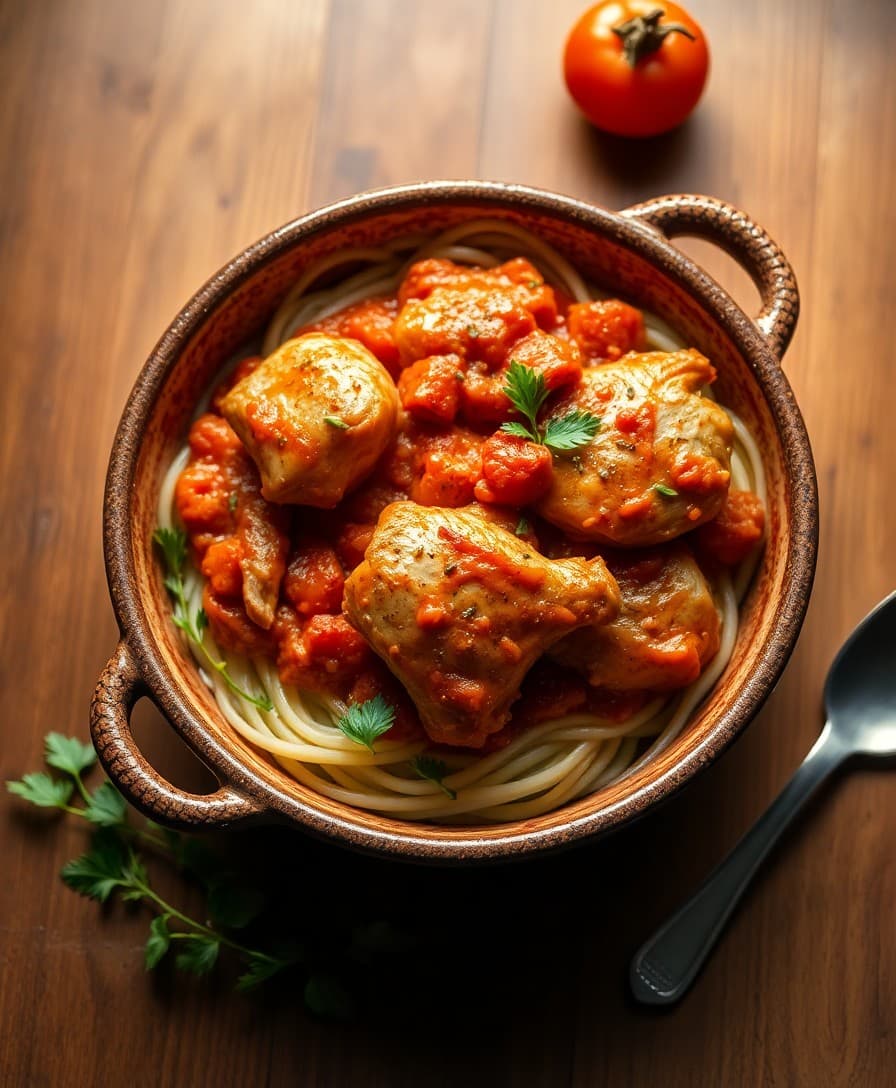
Pollo alla Cacciatora — hunter's chicken — is one of Italy's most beloved one-pan braises, born from the cucina povera tradition of Tuscany and central Italy. Bone-in chicken pieces are slowly cooked down with ripe tomatoes, briny olives, fragrant rosemary and a generous splash of white wine until the meat falls effortlessly from the bone. It is the kind of dish that fills the whole kitchen with warmth and makes everyone pull up a chair.
Ingredients
- 1.4 kg (3 lb) bone-in, skin-on chicken pieces (thighs and drumsticks)
- 400 g (14 oz) canned whole peeled San Marzano tomatoes, crushed by hand
- 150 g (5 oz) pitted Taggiasca or Kalamata olives
- 120 ml (½ cup) dry white wine (e.g. Vernaccia or Pinot Grigio)
- 1 medium white onion, finely sliced
- 2 garlic cloves, lightly crushed
- 3 sprigs fresh rosemary
- 3 tablespoons extra-virgin olive oil
- Fine sea salt and freshly ground black pepper
Method
- Pat the chicken pieces completely dry with kitchen paper, then season generously on all sides with salt and pepper.
- Heat the olive oil in a wide, heavy-bottomed casserole or deep skillet over medium-high heat. Working in batches to avoid crowding, sear the chicken skin-side down for 5–6 minutes until deep golden, then turn and brown the other side for 3 minutes. Transfer to a plate and set aside.
- Reduce the heat to medium. In the same pan, add the sliced onion and crushed garlic and cook gently for 5 minutes, scraping up any browned bits from the bottom, until softened and translucent.
- Pour in the white wine and let it bubble vigorously for 2 minutes to cook off the alcohol completely.
- Add the crushed tomatoes, olives and rosemary sprigs. Stir everything together and bring the sauce to a gentle simmer.
- Nestle the seared chicken pieces back into the pan, skin-side up, pushing them into the sauce without submerging the skin. Cover with a lid slightly ajar and braise over low heat for 35–40 minutes, turning the chicken once halfway through, until the meat is completely tender and pulling away from the bone.
- Remove the lid for the final 5 minutes to allow the sauce to reduce slightly and intensify. Taste and adjust salt if needed. Discard the rosemary sprigs before serving.
- Serve directly from the pan with crusty bread, soft polenta or roasted potatoes to soak up every drop of the sauce.
Tips from the kitchen
Frequently asked questions
Can I use white wine or red wine for Pollo alla Cacciatora?
Both are regionally authentic. Tuscan versions typically use dry white wine (such as Vernaccia di San Gimignano) for a lighter, more delicate sauce. Roman-style Cacciatora often uses red wine for a richer, darker result. Either works — choose the style you prefer.
Can I make Pollo alla Cacciatora ahead of time?
Yes — in fact it tastes even better the next day as the flavours meld overnight. Cool completely, store covered in the refrigerator for up to 2 days, and reheat gently over low heat with a splash of water or wine to loosen the sauce if needed.
What is the best side dish to serve with hunter's chicken?
Creamy soft polenta is the classic Tuscan pairing, as it absorbs the rich tomato sauce beautifully. Alternatively, serve with thick slices of pane sciocco (unsalted Tuscan bread), mashed potatoes or simply a green salad to balance the richness.