 Cucina Veloce
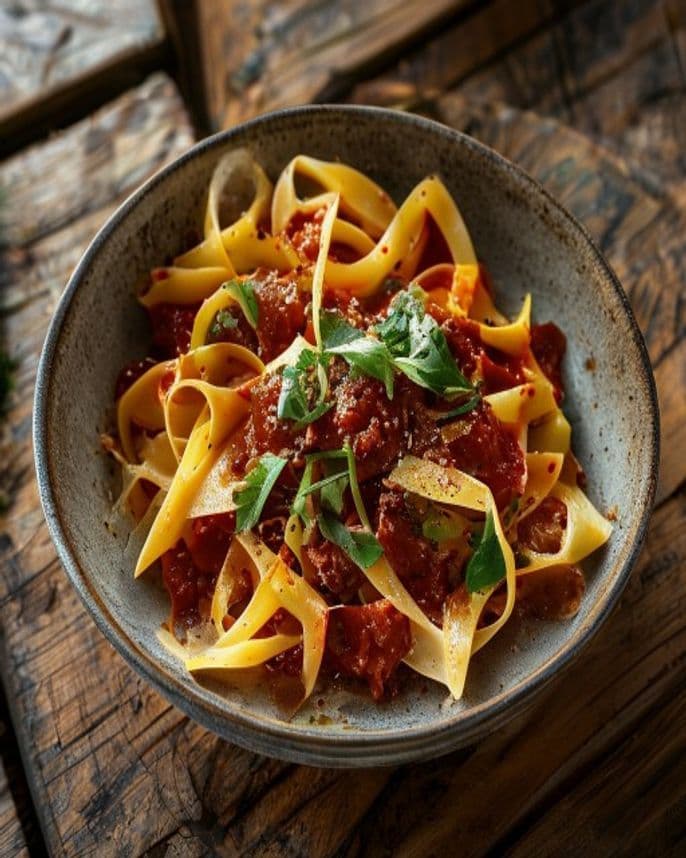
Tagliatelle al Ragù Bolognese – Authentic Recipe
In Bologna, ragù is a serious matter — a slow, patient sauce of mixed meats, soffritto, and a splash of wine that simmers for hours until deeply rich and fragrant. The Accademia Italiana della Cucina even registered the official recipe in 1982, and it calls for tagliatelle all'uovo, never spaghetti. Master this once and you will never look back.
Ingredients
- 400 g fresh egg tagliatelle
- 250 g coarse-ground beef (chuck or plate)
- 150 g coarse-ground pork (shoulder)
- 150 g pancetta, finely diced
- 1 medium white onion, finely diced
- 2 medium carrots, finely diced
- 2 celery stalks, finely diced
- 150 ml dry white wine
- 200 g whole peeled tomatoes (passata or crushed San Marzano)
- 100 ml whole milk
- 2 tablespoons extra-virgin olive oil
- Fine sea salt and freshly ground black pepper, to taste
- Parmigiano Reggiano, freshly grated, to serve
Method
- Heat the olive oil in a heavy-bottomed pot or Dutch oven over medium heat. Add the pancetta and cook, stirring, for 3–4 minutes until the fat has rendered and the pancetta is lightly golden.
- Add the onion, carrot, and celery (the soffritto) and cook gently over low-medium heat for 8–10 minutes, stirring often, until completely softened and just starting to turn golden. Do not rush this step.
- Raise the heat to medium-high, add the ground beef and pork, and cook, breaking up the meat with a wooden spoon, for 6–8 minutes until every trace of pink is gone and the meat begins to caramelise slightly on the bottom of the pot.
- Pour in the white wine and stir, scraping up any browned bits from the bottom. Let the wine evaporate completely, about 3–4 minutes.
- Add the tomatoes, season with salt and pepper, stir well, and bring to a gentle simmer. Reduce the heat to the lowest possible setting, partially cover, and cook for a minimum of 2 hours — stirring every 20 minutes and adding a small ladle of warm water if the sauce looks dry. A 3-hour cook is even better.
- About 10 minutes before the ragù is ready, stir in the milk. This mellows any acidity and gives the sauce its characteristic silky finish. Taste and adjust seasoning.
- Bring a large pot of well-salted water to a rolling boil. Cook the fresh tagliatelle for 2–3 minutes (or until al dente). Reserve a cup of pasta cooking water before draining.
- Drain the tagliatelle and add directly to the ragù in the pot. Toss vigorously over medium heat for 1 minute, adding a splash of pasta water if needed to loosen. Serve immediately in warm bowls with a generous grating of Parmigiano Reggiano.
Tips from the kitchen
Frequently asked questions
Can I make the ragù in advance?
Absolutely — in fact it improves with time. Let it cool completely, then refrigerate for up to 3 days or freeze for up to 3 months. Reheat gently on the hob with a splash of water or warm stock to loosen.
Can I use only beef and skip the pork?
You can, but the combination of beef and pork is what gives authentic Bolognese its depth and sweetness. If you must use only one meat, choose a well-marbled beef cut like chuck — lean minced beef alone will produce a drier, less flavourful sauce.
Why no cream, no garlic, and no basil in a real Bolognese?
The registered 1982 recipe from the Accademia Italiana della Cucina contains none of these. Garlic and basil push the sauce toward a Neapolitan profile; cream is a northern European addition that dilutes the meaty richness. The milk added at the end provides all the creaminess the authentic recipe needs.